
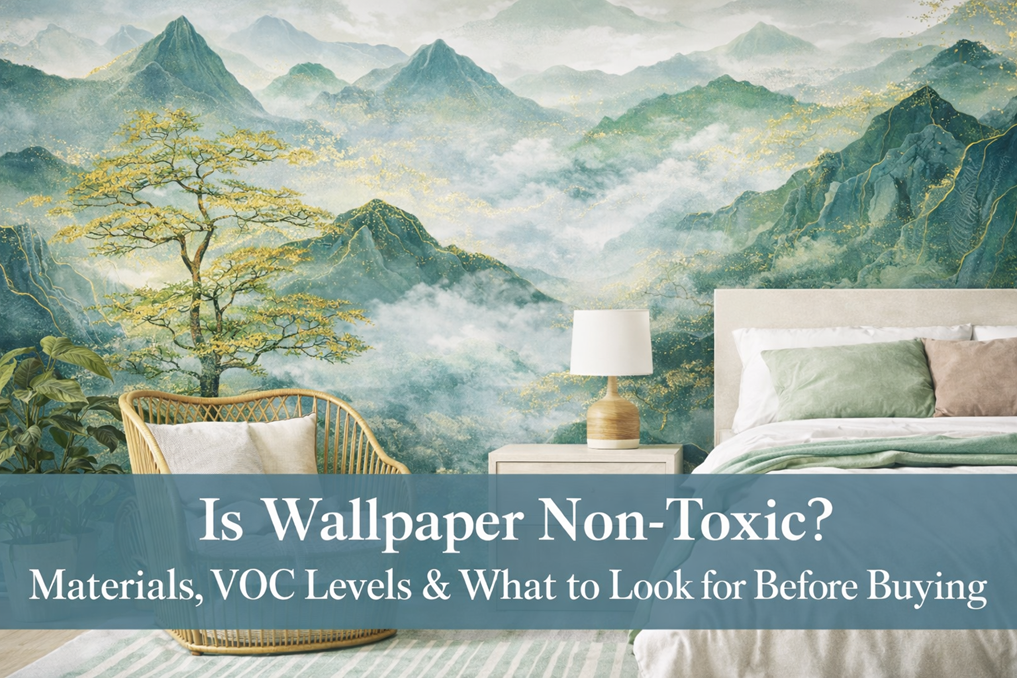




To jump right in: Is wallpaper actually toxic? The truth is, not all wallpapers are created equal, and many conventional and easy options do contain hidden chemicals that impact both indoor air quality and the environment.
As we become conscious of what we bring into our homes, decor is no longer just about aesthetics. It’s about health, it’s about sustainability. And increasingly, it’s about the invisible impact materials can have on our indoor air, our bodies, and the environment.
Wallpaper, despite being a favourite decor choice, often sits at the centre due to its concern of chemicals. The concern becomes more personal when pets and children enter the picture.
Therefore, in this blog, Magicdecor experts will break down everything you need to know about non-toxic wallpapers, from understanding different toxic substances to knowing exactly what to look for before buying.
What Does “Non-Toxic Wallpaper” Actually Mean?
The Ecology Center, a non-profit environmental group, tested more than 2,000 wallpapers for toxic substances and found that many contained concerning levels of harmful chemicals. These substances can off-gas into indoor air or enter the body through inhalation and affect our health.
Because of findings like these, ‘non-toxic wallpaper’ has come to mean wallpaper that is intentionally manufactured without chemicals such as VOCs, heavy metals, or PFAS that is known to harm human health.
In other words, ‘non-toxic wallpaper’ is designed to create a healthy living environment and a sustainable planet in mind.
Why Some Wallpapers Can Be Harmful?
Here’s a breakdown of all the toxic chemicals present in wallpapers that make it harmful to us and the environment:
1. VOCs
Volatile organic compounds (VOC) is one of the main toxins present in wallpapers and any other product that emerges during the manufacturing process. Formaldehyde, toluene, and benzene off gas into the air, affecting the air quality.
2. PVC Toxins
Many wallpapers in the market sell wallpapers with a PVC (Polyvinyl chloride) layer, otherwise known as vinyl, to help with water-resistant and durability. The phthalates released, mess with your hormones, affect the air quality, and release additional toxins at the end of their life cycle.
3. PFAS
PFAS (perfluoroalkyl and polyfluoroalkyl substances) are present in wallpapers to enhance their performance and make them more resistant to water and stain. Once you’re exposed to its chemicals, it affects our bodies and poses a number of health issues.
4. Flame Retardants
While flame retardants are not used in wallpapers anymore, some brands might still use it as an alternative to premium, safe resources. They are used to delay the spread of fire, however, can cause several health issues.
5. Heavy Metals
Heavy metals such as lead, mercury, arsenic, or cadmium are toxic in wallpapers because they release hazardous dust and toxic fumes, which then act as carcinogens and cause respiratory, developmental, and skin issues.
Wallpaper Toxicity: Myths vs Facts
Wallpaper toxicity is a common concern, but many of these fears are based on outdated information. Let’s debunk these common wallpaper toxicity myths:
| Myth | Fact |
| All wallpaper is toxic and unsafe for indoor spaces | Modern wallpapers are generally safe for indoor use when manufactured properly |
| Wallpaper always releases harmful chemicals into the air | Wallpapers from reputed brands have low VOC and less toxins emissions |
| Only paint is a safe wall covering | Wallpaper and paint are both safe options when certified low-VOC products are used |
| Wallpaper adhesive is always harmful | Today’s adhesives are often water-based and non-toxic |
| Wallpaper inks have arsenic | Which was true earlier, however, the pigments used today are eco-friendly |
Common Non-Toxic Wallpaper Materials
Your designs on your walls
Upload any image to order wall mural prints online
As we have seen the toxic substances present in wallpaper above, let us now glance at the non-toxic materials wallpapers can be manufactured with:
1. Natural Fibres
Wallpapers manufactured using natural fibres such as cotton, hemp, or linen are one of the most excellent options. Not only are these materials biodegradable, they do not emit any harmful chemicals in the air, making it a sustainable choice.
2. Paper-Based
Paper-based materials is a traditional wallpaper choice that is printed using water-based inks. Nowadays, many brands sell paper-based wallpaper using organic paper which are either recycled or sustainably sourced.
3. Bamboo and Grasscloth
Wallpapers are made from bamboo, grasscloth, and cork are absolutely free from harmful chemicals and give your walls the tactile texture of natural materials. While these wallpapers have a low environmental impact, the upkeep is quite demanding.
4. Non-Toxic Inks and Adhesives
Even if the wallpaper material is non-toxic, the ink and adhesive used should also have eco-friendly and safe resources. Choose wallpapers with VOC-free and water-based inks and adhesives to be completely free of toxins.
5. Recycled Materials
The last and not least non-toxic wallpaper are those made of recycled materials. Many manufacturers create these wallpapers using old paper or wallpaper, thus reducing environmental waste and releasing no toxins.
Why VOC-Free and Non-Toxic Wallpapers Matter in Homes?
Here’s why choosing VOC-free and non-toxic wallpaper for your home matters a lot:
1. Minimizes Environmental Impact
Non-toxic wallpapers are more environmentally-friendly by observing sustainable practices and resources that ensure the wallpaper manufacturing process does not contribute to the degradation of the environment.
2. Does not Affect Indoor Air Quality
Many traditional wallpaper contain VOCs that release harmful fumes in the air. However, VOC-free wallpapers contribute to better air quality in your home, especially in rooms where you spend the most time.
3. Child and Pet Safety
If you have children and pets at home, it makes it all the more dire to choose non-toxic wallpapers. With VOC-free wallpapers, you are assured everything they crawl, sniff, or touch, they won’t be vulnerable to toxins.
4. Healthier Living Space
By choosing non-toxic wallpapers, you are creating a safe and healthy living for your family and guests, devoid of any toxic substances. This way, you get a peace of mind and save your family from potential health risks.
Is Non-Toxic Wallpaper Safe for Nurseries and Kids’ Rooms?
Non-toxic wallpapers in nurseries and kids’ rooms are non-negotiable. Babies and young children are far more vulnerable to chemical exposure than adults. That means VOCs released in the air through wallpaper can have a bigger impact on their health.
Choosing non-toxic wallpaper ensures the room is not just beautiful but genuinely supportive of your child’s health and well-being. Therefore, look out for wallpapers made from natural or responsibly sourced materials, printed with water-based inks, and certified for low or zero VOC emissions.
Understanding Certifications & Eco Labels
Since we are all becoming conscious of the environmental impact of our actions, habits, and in this case, decor choices, it would come in handy to know these eco labels:
1. FSC Certification
FSC (Forest Stewardship Council) certificate present under wallpaper descriptions assures you that the paper used to make wallpaper is resourced from responsibly managed forests.
2. Greenguard Certification
The Greenguard certification indicates that the wallpaper complies with low chemical emission standards, ensuring the product releases little to no VOCs for a healthier indoor air quality.
3. Recycled Content Label
A symbol we’ve seen on some products we purchase for our house, the recycled content shows the percentage of recycled content present in the wallpaper, helping you reduce the dependency on virgin materials.
4. Lacey Act Compliance
The Lacey Act Compliance prohibits the trade of illegally sourced plants and timber, ensuring you that your wallpaper materials are legally and sustainably sourced.
What to Look for Before Buying Non-Toxic Wallpapers
If you’re concerned about accidentally buying wallpapers with toxic materials, here’s everything you need to look for before purchasing:
Subscribe to Save 5%
All subscribers get an additional 5% OFF on their first order

1. Check for Wallpaper Description
Before purchasing the wallpaper, start with the wallpaper description. A genuine non-toxic wallpaper brand will be upfront about what its products are made of and how they’re produced. Moreover, don’t just look for terms like eco-friendly or VOC-free, check for certifications.
2. Look Out for Certifications
Certifications are a direct indication of whether a wallpaper is non-toxic and VOC-free or not. Therefore, look out for certificates like FSC, Greenguard, or recycled content that guarantee they’ve been manufactured ethically, sustainably, and responsibly.
3. Check Whether They are Made-to-Order
Traditionally, wallpaper manufacturers mass produce wallpapers and try to sell it all at once. However, these bulk wallpapers only end up in landfills or trash when they don’t see. Therefore, check for brands that print on demand and reduce elimination of wallpaper rolls and resource optimization.
4. Smell Test for Assurance
Order a sample of your desired wallpaper design from a reputed manufacturer and smell test it. If the wallpaper smells heavily of paint or chemicals, it is probably infused with VOCs. Instead, choose wallpapers that are odorless and non-toxic.
How Responsible Brands Ensure Wallpaper Safety
While many online platforms promise non-toxic wallpapers, only a few of those see through it. One of those few is Magicdecor, a customized home decor brand offering eco-friendly, VOC-free wallpapers and wall murals with bespoke and made-to-measure designs tailored to each space.
We do not provide decor solutions at the cost of your family’s health. Therefore, we make it our priority to deliver wallpapers that are:
- Manufactured using VOC-free, water-based, and GreenGuard Gold-certified inks.
- Materials are FSC-certified.
- Non-toxic that does not affect indoor air quality.
- Safe for your pets and kids.
- Eco-friendly and recycled packaging.
- Made-to-order to reduce waste and resource utilization.
Conclusion: Should You Choose Non-Toxic Wallpaper?
Choosing non-toxic wallpaper is all about being intentional with the spaces you live in everyday. The walls that surround you quietly influence indoor air quality, comfort, and long-term well-being. When you choose safer, non-toxic materials, you’re investing in a home that supports health just as much as it supports style.
In the end, choosing non-toxic wallpaper is a smarter and more mindful way to design your home. One that lets you enjoy your home fully, without the hidden costs to your health or the environment.
FAQs
- Is peel and stick wallpaper non-toxic?
Peel and stick wallpaper can be non-toxic, but many options are made with PVC and synthetic adhesives. Look for PVC-free materials and low VOC certificated peel and stick wallpapers.
- Does wallpaper release harmful fumes?
Yes, some wallpapers do. Solvent-based or arsenic inks can release VOCs through off-gasing. Therefore, choose non-toxic wallpapers made with water-based inks that release little to no fumes.
- What is the safest wallpaper for babies?
The safest wallpaper for babies is VOC-free, PVC-free, made from natural materials, and printed with water-based inks.
- Are PVC wallpapers toxic?
PVC wallpapers contain phthalates and other chemicals that affect the indoor air quality. Therefore, yes, they are toxic.
- How long do VOCs last in wallpaper?
VOC emissions are strongest right after installation and can continue for six months to several years.







Top Trending Blogs
Stay up to date with the latest trends


 Magicdecor uses cookies