
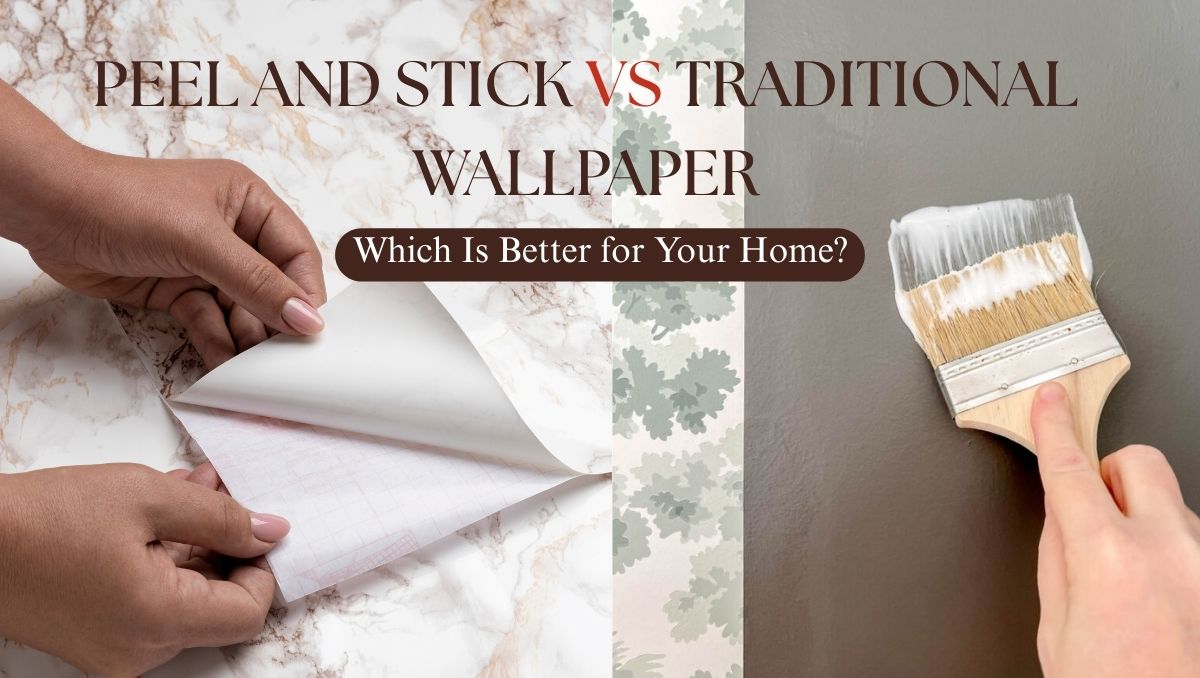




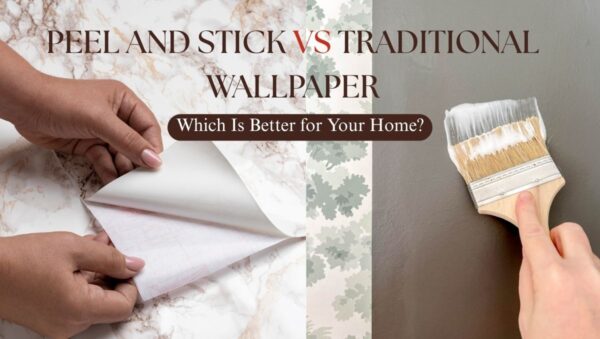
Wallpaper has made a strong comeback in modern interiors, offering homeowners to infuse their home with personality and style. With the rise of peel and stick wallpaper alongside traditional wallpapers, choosing the right option has become more about practicality.
Both these options come with different benefits in terms of installation, cost, durability, and suitability for different rooms. Understanding these differences helps you as homeowners make the right choice based on your space, budget, and design needs.
Peel and stick wallpaper is better for those looking for easy installation and a temporary decor solution. While traditional wallpaper is better for homeowners who want a long-lasting and more permanent decor.
If you’d like to know more about their pros and cons, continue reading this blog to deduce which option is better for your home.
What Is Traditional Wallpaper? Understanding the Basics
Traditional wallpaper is an age-old wall covering most people think of when they hear the word ‘wallpaper’. It comes in rolls and is applied to walls using a separate paste or adhesive. Some of its other characteristics include:
- High durability and designed to last many years.
- Offers a wide variety of styles, materials, textures, and finishes.
- Needs thorough wall prep and correct installation.
What Is Peel and Stick Wallpaper? Understanding the Basics
Peel and stick wallpaper is a type of modern, low-commitment alternative to traditional wallpaper. As the name suggests, it has a self-adhesive backing that makes it easy to apply and remove. Other key characteristics to note:
- Has a built-in adhesive backing.
- Easy to install without the need of paste or installation tools.
- Can be repositioned during installation and creates no mess.
Peel and Stick vs Traditional Wallpaper: Key Differences
Here’s a tabular comparison table on peel and stick wallpaper vs traditional wallpaper help you weigh the differences before purchase:
| Feature | Peel and Stick Wallpaper | Traditional Wallpaper |
| Installation Ease | Very easy, comes with a backing that can be installed by yourself | Requires adhesive and more professional help to install |
| DIY-Friendliness | Excellent for beginners | Might be challenging without professional help |
| Removal | Peels off easily without much residue | Requires soaking, and scraping and may leave residue behind |
| Surface Requirements | Works on smooth, clean surfaces | Works on smooth as well as slightly textured surfaces |
| Durability | Ideal in medium-traffic areas | Durable in high-traffic areas |
| Cost | Slightly higher but cheaper overall due to DIY installation | Slightly lesser but installation costs adds up |
| Maintenance | Often washable | Depends on material as some are vinyl and some fabric |
| Humidity Tolerance | May peel in very moist areas | With water-resistant properties, can handle humidity |
| Use | Temporary spaces and quick decor upgrades | Long-term decor and high-traffic walls |
Pros and Cons of Traditional Wallpaper
While both peel and stick wallpaper and traditional wallpaper win in their own respective areas, there are some advantages and drawbacks. Let’s take a loot at that:
1. Pros
- Longevity: When installed correctly, traditional wallpapers can last up to more than a decade without the need for replacement.
- High Durability: One of the best advantages of traditional wallpapers are their impressive durability, withstanding domestic wear and tear for years.
- Premium Designs and Quality: Traditional wallpapers often boast a plethora of rich designs and textures that turn any space sophisticated.
2. Cons
- Difficulty in Removal: When it comes to changing the look, traditional wallpapers often pose challenges during removal, as it often damages the wall if not done correctly.
- Complex Installation: Installing traditional wallpaper is more labor intensive as the wallpaper needs to be professionally installed to last long.
- Higher Cost: The upfront cost of traditional wallpapers is on the higher side as compared to self-adhesive options.
Pros and Cons of Peel and Stick Wallpaper
1. Pros
- Temporary and Hassle-Free: If you want to spruce up your room without the long-term decor commitment or decorate wall for a special occasion, peel and stick wallpapers are an excellent temporary decor solution.
- Easy Application: One of the most likeable features of peel and stick are their user-friendly application. There is no need for messy, glue hands as it comes with a self-adhesive backing that can be repositioned.
- Damage-Free: Unlike traditional wallpapers, self-adhesive options are easy to remove without causing wall damage, making them perfect for rented spaces.
2. Cons
- Short Lifespan: Peel and stick wallpaper are designed for temporary use, making it more prone to peeling and fading as compared to traditional options.
- Wall Damage Risks: Not all peel and stick wallpapers guarantee zero wall residue. Low-quality options may strip away wall paint or behind glue residue.
- Not Suitable for Textured Surfaces: Peel and stick wallpapers are not suitable on textured surfaces like concrete, as the trapped air bubbles lead to early peeling.
Peel and Stick vs Traditional Wallpaper: Installation
Let’s take a look at the differences between the peel and stick installation vs the traditional one:
Your designs on your walls
Upload any image to order wall mural prints online

1. Peel and Stick Wallpaper
- Easy to install because it comes with a self-adhesive backing, which requires no paste or installation tools.
- It can be peeled and directly pasted to clean, smooth walls after measuring and positioning the wall.
- The installation process is quick and mess-free, making it suitable for beginners and DIY enthusiasts.
- It can be removed easily without damaging the wall and repositioned if necessary.
2. Traditional Wallpaper
- Traditional wallpaper requires wallpaper paste or adhesive which has to be applied either to the paper or the wall.
- Installation requires professional skill to ensure proper alignment and smooth application.
- Once applied, it forms a strong bond with the wall, resulting in a more durable and long-lasting finish.
- Removal is challenging as it requires water, tools, and sometimes, professional help.
Peel and Stick vs Traditional Wallpaper: Cost Comparison
Now let’s compare the cost differences of peel and stick vs traditional wallpaper:
1. Peel and Stick Wallpaper
- Has a moderate upfront cost as the basic roll is slightly higher than basic traditional wallpaper.
- Since you can install it yourself, there is no need to pay for professional installation costs.
- If the wallpaper is torn or damaged, expenses for a replacement may add up.
2. Traditional Wallpaper
- Can be less expensive, depending on the material, for basic patterns.
- Installation offers require professional help, which adds a significant labor cost.
- Since it’s more permanent, it saves you expenses on replacement or repairs in the long run.
5 Reasons Why You Should Pick Traditional Wallpaper
Whether you’re thinking of wallpapering an accent wall or the entire room, here are five reasons you should consider traditional wallpaper:
1. Superior Materials
From fabric and vinyl-based material to textured and embossed finishes, traditional offer an endless collection of superior designs, materials, and style that add a layer of depth and sophistication to any room.
2. High Durability
One of the admirable qualities of traditional wallpapers is their durability in withstanding daily wear and tear. When properly installed, they last decades and more without peeling or fading, even in tough environments.
3. Wide Selection of Designs
Whether you want to create a minimalist or bold, artistic vibe in your house, traditional wallpapers offer a huge range of designs, patterns, and colors that suit every mood and interior aesthetic.
4. Longlasting Lifespan
Traditional wallpapers are designed to last for years without peeling or shifting. Due to the high-quality materials, tough adhesive, and proper installation used, traditional wallpapers make a long-term decor fixture.
5. Ideal for High-Traffic Areas
Traditional wallpapers are ideal in high-traffic areas due to their high-quality materials, long-term longevity, and easy surface maintenance. Choose traditional wallpapers if you want a blend of luxury and durability.
6 Reasons Why You Should Pick Peel and Stick Wallpaper
Whether you are a DIY enthusiast or someone looking to upgrade your home temporarily, peel and stick wallpapers are your best friend. Here are additional seven reasons to choose peel and stick wallpapers:
1. Easy Application
Peel and stick wallpapers are designed for user-friendly decor applications. They come in rolls or pre-cut panels with adhesive backing that eliminates the cumbersome process of measuring, cutting, and pasting with glue.
2. Damage-Free
High-quality self-adhesive wallpapers are engineered to peel off easily without leaving any glue residue behind or scraping off the paint wall. Unlike traditional options that require soaking and scraping, peel and stick makes a great choice for temporary or transitional decor needs.
3. Mess-Free
Peel and stick wallpapers require no application of glue, which makes the installation process hassle and mess-free. This feature is ideal for those who want to avoid cleanup and mess and in places where cleanliness is crucial.
4. DIY-Friendly
Self-adhesive wallpapers are particularly popular amongst DIY enthusiasts as it caters to their ‘hands-on’ projects. Since the application is so easy, anyone without any skill or tools can take up this fun and creative project of personalizing their space.
5. Versatile
With peel and stick wallpapers, any surface can be a decor canvas. Apart from walls, you can use them to decorate counters, cabinets, or dressers, giving them a new look without the need for extensive and costly makeovers.
Subscribe to Save 5%
All subscribers get an additional 5% OFF on their first order

6. Budget-Friendly
Last but not least, choose peel and stick wallpapers if you do not want to spend a fortune on home or wall upgrades. Compared to traditional wallpapers, they are more affordable as they save you installation costs.
Room-by-Room Recommendation
No matter which room you are planning to wallpaper, here are our room-by-room recommendations for the most suitable wallpaper type:
1. Living Room
The most suitable wallpaper for the living room is traditional wallpaper, particularly non-woven and premium canvas texture. These are the ideal choice because traditional wallpaper gives a more long-term luxurious look and finish.
2. Bedroom
Traditional wallpaper works best in the bedroom as well as it provides durability and a more luxurious wall look. Since bedrooms have little wear and tear and no humidity issues, traditional wallpaper stays intact for a long time.
3. Dining Room
Both traditional and peel and stick wallpaper is suitable in the dining area to add elegance and durability. Since dining rooms are more about ambience, traditional wallpaper delivers a richer and permanent aesthetic.
4. Kitchen and Bathroom
Peel and stick is better suited for kitchen and bathrooms as it makes it easier to clean and maintain due to all the stains and water spills. However, to ensure the longevity of the wallpaper, make sure it is installed and maintained well.
Common Mistakes to Avoid
Avoiding these common mistakes ensures a smooth, professional, and long-term life of the wallpaper:
1. Poor Wall Preparation
Applying either peel and stick or traditional wallpaper on dirty, uneven, or unprimed walls can prevent proper adhesion and cause peeling and bubbling.
2. Using the Wrong Wallpaper for the Environment
Installing non-moisture-resistant wallpaper in kitchens or bathrooms can result in peeling, mold, or weak durability over time.
3. Skipping Recommend Installation Steps
Ignoring manufacturer instructions such as adhesive brand, drying time, etc can negatively affect the final appearance.
4. Incorrect Use of Adhesive
Using too much or too little paste in traditional wallpaper installation can lead to bubbles, peeling edges, or weak adhesion with the wall surface.
Final Verdict: Peel and Stick vs Traditional Wallpaper
There is no single option that is better for every home. Peel and stick and traditional wallpaper each serve various needs, and the better choice depends on how the space is used, how long the wallpaper is intended to stay, and the overall budget.
Peel and stick is better suited for homes that need quick and easy installation and low-commitment decor, making it ideal for rented homes, accent walls, or spaces that may change often. Traditional wallpaper, on the other hand, is better for homeowners looking for a more permanent and long-lasting finish, particularly in rooms meant to feel timeless and durable.
Ultimately, you must choose a wallpaper that aligns with your lifestyle, room conditions, and expectations. And if you need to get started with wallpaper, start with Magicdecor’s collection of traditional wallpapers and peel and stick options.
FAQs
- Which option works best for cold climate regions?
Traditional wallpaper generally performs better in cold climates because its adhesive forms a stable bond over time.
- Which option is better for high-humidity areas like kitchens and bathrooms?
Peel and stick wallpaper, especially vinyl-based, is better suited for high-humidity areas.
- Which option is more cost-effective overtime?
Peel and stick can be more cost-effective in the short term because it reduces installation costs but traditional wallpaper is more cost-effective over time as it remains in place for many years without needing replacement.
- Can both types of wallpaper be installed on all wall surfaces?
Neither option works well on heavily textured or damaged walls. Peel and stick requires very smooth walls for proper adhesion, while traditional wallpaper can tolerate minor imperfections if the wall is properly primed and installed.










Top Trending Blogs
Stay up to date with the latest trends






 Magicdecor uses cookies