
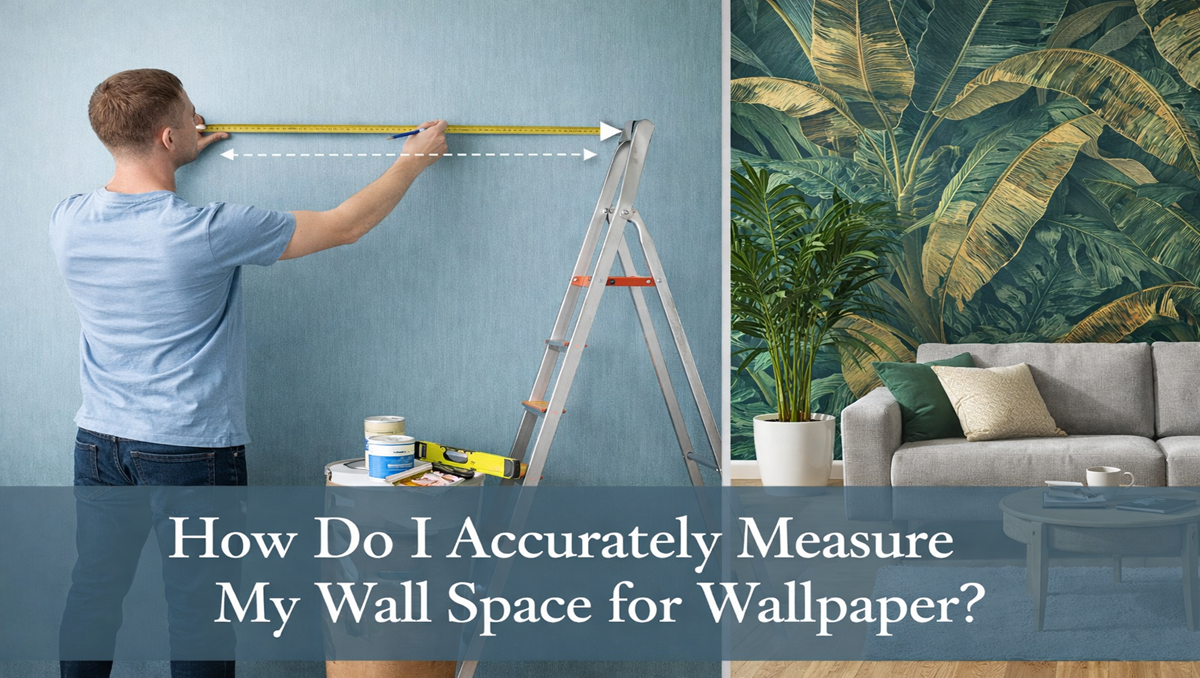




To accurately measure your wall space for a wallpaper, you need to gather tools to measure the height and width of each wall.
You’ve spent hours trying to find the perfect wallpaper, one that works with your room lighting and room size. The excitement builds as it finally arrives and you’ve ready to see it come to life on your walls. But the moment you unroll the panels, you realise you’re falling short on material.
And that’s exactly why accurate measurements are crucial as something as simple as getting the numbers right can completely change how your wallpaper turns out.
With guidance from Magicdecor’s experts, this blog walks you through how to measure your wall correctly using the right tools, simple methods and formula, and practical tips to get it right the first time.
Why Accurate Wall Measurement Is Important?
Getting your wallpaper measurements has several importance such as:
- Prevents Shortage and Overordering: Accurate measurements help you buy just the right amount of wallpaper material, not too much and not too less.
- Ensures Proper Pattern Alignment: Incorrect measurements affect pattern matching, which will lead to mismatched or uneven look.
- Saves Time and Effort: Measuring correctly reduces the chances of returns, last-minute adjustments, and frustrations during installation.
- Helps Achieve a Clean, Flawless Fit: Right measurements ensure the wallpaper fits well and there are no overlaps or awkward cuts.
Before You Start Measuring: Key Preparation Steps
Here are essential tools needed to accurately measure your walls:
- Measuring Tape: Use a laser meter or a retractable tape to accurately measure the width and height of your wall(s).
- Ladder or Stool: If you’re measuring high walls and ceiling heights, a ladder or a stool comes in handy.
- Pen and Paper: Keep aside a pen and a paper to jot down measurements immediately.
- Calculator: Use a calculator or an online square footage converter to derive the total area of the wall.
Step-by-Step Guide to Measuring Your Wall
Follow these steps to ensure you get the right measurements of the wall for your wallpaper:
1. Measure the Wall Height
Start by measuring from the floor to the ceiling. Take measurements at 2-3 points along the wall, especially if the ceiling isn’t perfectly even.
2. Measure the Wall Width
Next, measure the full width of the wall from one end to the other. Again, measure it from different points on the wall and then note down the widest measurement.
3. Repeat for Every Wall
If you’re wallpapering an entire room, measure each wall separately instead of assuming they are all the same size.
4. Double-Check Your Measurements
Go over all your measurements again to ensure accuracy. A quick recheck can help avoid costly mistakes later.
5. Add Extra Margin
It’s always wise to add a little extra to your measurements for trimming, adjustments, and proper pattern alignment, especially if the walls are uneven.
Your designs on your walls
Upload any image to order wall mural prints online
Simple Formula to Calculate Wallpaper Size
Gather the width and height measurements of the wall and use this formula to derive the total square footage of the wall:
- Simply multiply the height measurements with width to get the total square footage. Like this below:
Height X Width = Total Sq. Ft.
How to Measure Different Types of Walls
Each and every space in the house is unique. But by following these steps on how to measure different types of wall, you’ll be confident in your measurements and ready to order the right amount:
1. Standard Walls
- Wall Width: Measure the full wall width from one side to the other. Always take 2-3 measurements from various points and note the widest width.
- Wall Height: Measure the wall from ceiling to the floor from 2-3 positions and note the tallest measurement.
2. Multiple Walls
- Measure the width and height of each wall and combine these measurements into one.
- Add 2-4 inches per wall to ensure no shortage and more flexibility during installation.
3. Walls with Doors and Windows
- Measure the width and height of the complete wall including the windows and doors.
- The obstacles will be removed during the installation process.
4. Staircases
- Identify the highest and lowest points on the wall.
- Measure the width from the highest point at the start of the staircase to the end to get width.
- Measure from the floor to the highest point near the ceiling to get the full height.
5. Sloped Walls
- Measure the wall on the highest and widest points, ignoring any slopes.
- The sloped part will be cut out during installation.
6. Multi-Sloped Walls
- Measure the wall on the longest point in both width and height.
- The sloped part will be cut out during installation.
Note: We recommend you add 2-4 inches to both width and height of all your measurements to account for irregularities and errors.
Measuring Feature Walls vs Full Rooms
The way measurements are taken can vary depending on whether you’re wallpapering a single wall or the entire room. Here’s how:
1. Measuring a Feature Wall (Accent Wall)
- For a feature wall, simply measure the height and width of that one wall.
- Include an important margin for trimming and alignment.
2. Measuring a Full Room
- When wallpapering all walls, measure each wall separately instead of multiplying one wall’s dimensions.
- Add up the total width of all walls and use the tallest wall height for calculations.
- Since it’s a full room, you’ll come across doors and windows. While some choose to subtract these areas, you can include them in the measurements.
Measuring for Custom Wallpaper vs Standard Wallpaper
Here’s the difference between measuring the wall for a custom wallpaper vs a standard one:
1. Custom Wallpaper
Custom wallpapers need exact wall dimensions for a perfect fit, therefore, the measurements should be done as follows:
- Include every detail of the wall from windows, doors, or opening for a custom fit as per your space.
- Measure at different points to ensure any unevenness and irregularities are accounted for.
2. Standard Wallpaper
Standard wallpapers often come in fixed roll sizes, so the approach for measurement differs slightly:
- Measure total area by multiplying the height and width of the wall.
- Convert measurements into the number of rolls based on how much area one roll covers.
Expert Tips for Accurate Wallpaper Measurement
Magicdecor experts share some crucial tips on accurate wallpaper measurement:
- Stick to one unit of measurement at all times to avoid confusion and errors.
- Measure each wall at different points and note the largest width and longest height.
- Always measure twice to ensure accuracy.
- Always add a small buffer of 2-4 inches to account for trimming, errors, alignment, and irregularities.
- Use the right tools to get more accurate measurements.
When to Call a Professional for Measurements
Professional assistance in measurement may be required in the following scenarios:
Subscribe to Save 5%
All subscribers get an additional 5% OFF on their first order

- When the walls in your house have complex architectural elements and niches.
- For custom-sized or large-scale murals where precision is a must.
- If you’re unsure how to measure slopes, openings, and other obstacles.
- If you’re installing expensive or delicate materials like grasscloth or silk to ensure no material or money gets wasted.
Common Mistakes to Avoid
1. Mixing Measurement Units
Switching between inches, centimeters, and feet or failing to convert and calculate before ordering will lead to sizing issues. Always stick to one system throughout the measurement process.
2. Guessing Measurements
Eyeballing the wall size instead of using proper tools often leads to underestimating or overestimating the required wallpaper. Precision matters here, so always measure properly.
3. Measuring Only Once
Relying on a single measurement increases the chances of errors. Measuring at least twice ensures accuracy and helps catch any inconsistencies.
4. Ignoring Wall Unevenness
Assuming your wall is perfectly straight. Walls are rarely straight and have many unevenness and irregularities on them. Always measure the width and height from 3 different places and use the largest/ highest measurement.
Measuring Correctly Makes All the Difference
If you’re scared to measure your walls because of tricky corners, slight curves, or uneven edges, you don’t have to worry. Magicdecor’s experts have shared expert-backed steps and tips to make the process far more manageable and far less intimidating.
Taking a little extra care at every stage and avoiding common mistakes ensures your wallpaper fits the wall perfectly as intended.
FAQs
- How do I calculate the size of all four walls in a room?
First measure the height and width of each wall separately and then calculate the area. Add all wall areas together to get the total square footage.
- Should I subtract doors and windows from my measurements?
It is optional, but many prepare not to subtract it as keeping a little extra wallpaper helps with pattern matching and reduces the risk of shortage.
- How much extra wallpaper should I order?
It is always recommended to add about 2-4 inches extra for trimming and adjustments during installation.
- Can I measure my walls without professional help?
Yes, if you gather the right tools and can take careful steps, measuring walls is pretty simple. Just take your time, measure twice, and note the largest dimensions for accuracy.








Top Trending Blogs
Stay up to date with the latest trends






 Magicdecor uses cookies